5 min read
Live
2026
Country Capital AI
A lightweight AI interaction system demonstrating modular API architecture, FastAPI design, and reversible AI integration.
FastAPIOpenAIPythonAPI ArchitectureSystem Design
Overview
Modern applications increasingly rely on intelligent, loosely coupled architectures. Country Capital AI was conceived not merely as a utility, but as an exploration in developer tooling elegance and system design thinking. It serves as a foundational blueprint for integrating large language models into highly structured, reliable API workflows.
This project is the ecosystem's primary demonstration of how reversible architecture and modular design can tame the inherent volatility of AI integration.
Problem & Motivation
Many AI-powered utilities suffer from fragile orchestration—where the line between prompt logic and business logic becomes blurred. This entanglement creates "architectural debt" that makes systems difficult to maintain, test, or pivot.
The objective here was to solve for determinism in non-deterministic systems. We needed a way to ensure that AI outputs consistently adhere to strict data contracts, regardless of model variations, hallucinations, or changes in the underlying LLM provider.
System Architecture
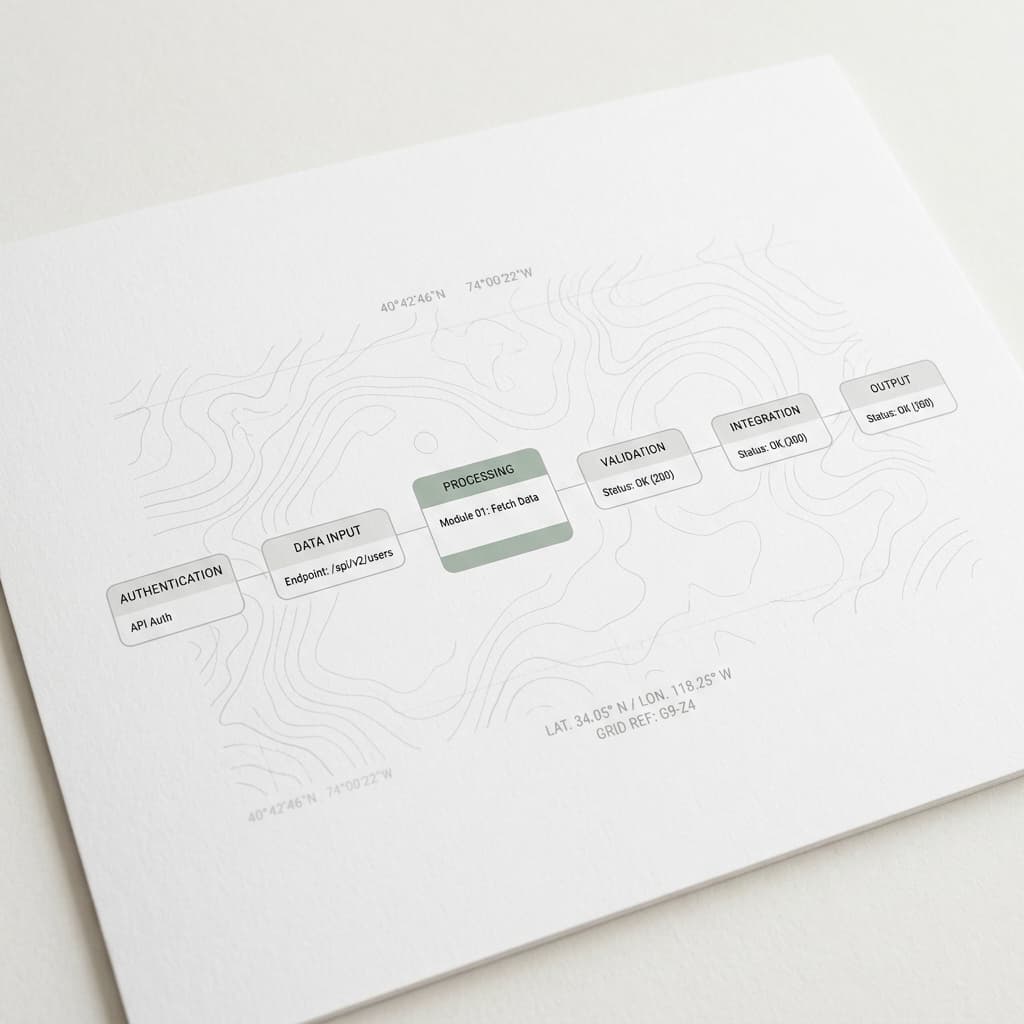
The system is built as a headless, API-first service, prioritizing a robust backend structure over immediate visual presentation. This isolation is a core tenet of our experimentation-safe infrastructure.
The system utilizes a FastAPI foundation for its native asynchronous capabilities and automatic OpenAPI schema generation. This provides a deeply typed, performant base layer that is completely self-documenting and provides a stable interface for any future frontend implementation.
By isolating the AI processing layer, we've created a reversible architecture. The OpenAI integration is abstracted away from the core routing logic. This means we can swap model providers—moving from OpenAI to Anthropic or a local Llama instance—without changing a single line of the consumer-facing API code.
Workflow & Process
Our iteration cycle is designed for rapid discovery within a stable framework. The workflow follows a strict path from experimentation to production:
- Lab Prototyping: New logic is first tested as a raw script in the Lab to reveal technical truths without disturbing the main system.
- Schema Definition: We define a strict Pydantic model that represents the "Ground Truth" for the specific interaction.
- Prompt Refinement: The system prompt is iterated upon until the LLM consistently produces valid JSON that matches the schema.
- Integration Testing: The new logic is integrated into the FastAPI backend, protected by automated validation layers.
Technical Decisions
One of our most critical technical decisions was using Pydantic Validation as a semantic firewall.
Schema Enforcement
Strict data validation ensures that the semantic responses from the language model are consistently shaped before they reach the consumer. If the LLM generates an invalid or malformed geographic response, the API rejects it and triggers a retry or error state before the client ever sees a failure. This maintains high system integrity even when dealing with non-deterministic outputs.
We intentionally separated System Logic (how the API works) from Knowledge Logic (what the AI knows). This boundary ensures that the core application remains maintainable even as the underlying AI models evolve or change.
Tradeoffs & Rationale
We deliberately sacrificed absolute execution speed for architectural structure. While a direct, unvalidated LLM call would be milliseconds faster, the overhead of our validation layer provides the stability required for a premium ecosystem.
By implementing a highly modular structure, we increased initial implementation complexity. However, this investment pays off in long-term flexibility, as the system can be expanded to handle complex relational geographic data with minimal restructuring.
Operational Constraints
While the FastAPI backend scales horizontally with ease, the system is constrained by the token-per-minute limits and latency of external AI providers.
The strict validation requirement means that adding new features takes slightly longer than in a "move fast and break things" environment. We accept this trade-off to ensure the Calm Luxury experience of the final product is never compromised by system instability.
Iteration & Evolution
The architecture evolved through several high-stakes pivots:
- From Monolith to Service: Started as a local CLI tool but was restructured into a headless service to support the broader ecosystem.
- The Pydantic Pivot: Initially used manual JSON parsing, which proved too fragile. Restructuring the entire system around Pydantic models was the single most important stability improvement in the project's history.
- Async Maturation: Migrated all I/O operations to be fully asynchronous to prevent blocking during high-latency AI requests.
Lessons & Reflections
This project serves as a masterclass in Operational Systems Thinking. It reinforced that:
- Modularity is an insurance policy against AI volatility.
- Data contracts are more important than model choice.
- Systems are better than projects. By building a modular service, we've created a reusable component for the entire Suraj Kumar ecosystem.
Research Foundation
The Architecture of Discovery
The technical foundations of this system were validated through several key Lab experiments:
- Semantic Search Playground: Our research into vector-based retrieval and embedding drift directly informed the semantic reasoning engine used here.
- Content Pipeline Agent: The agentic orchestration patterns developed in the Lab provided the blueprint for our modular processing layers and automated validation loops.
- Monetization Systems: The "Isolation Strategy" for third-party scripts developed here informs how we handle high-latency, non-deterministic AI interactions without blocking the main thread.
Future Direction
The next phase for Country Capital AI is deep integration into a premium Next.js interaction layer. We are also exploring:
- Self-Healing Prompts: Implementing a system that can automatically re-prompt the LLM with error context if validation fails.
- Semantic Caching: Using vector databases to cache similar geographic queries, further reducing latency and cost.